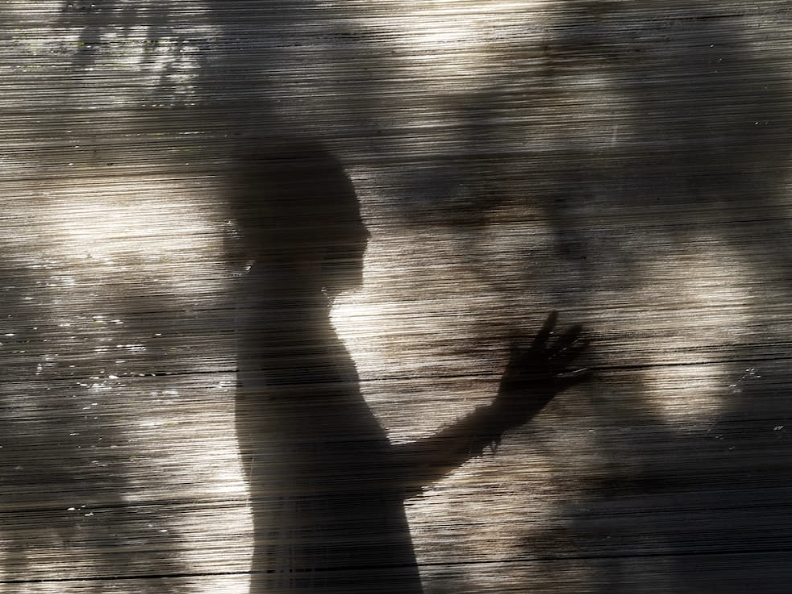
Listening to the Invisible
Ludovica Lugli is a contemporary artist based in Rome whose practice explores the invisible structures that shape human experience: relationships, memory, identity, and the emotional bonds connecting people to one another and to the places they inhabit.
Working across painting, sculpture, installation, fresco, and participatory projects, she develops symbolic visual narratives where the visible world becomes a metaphor for what cannot be immediately seen. Anthropomorphic animals, fragmented bodies, faceless figures, suspended objects, and organic materials become recurring elements through which she investigates empathy, vulnerability, transformation, and the fragile balance between the individual and the collective. Rather than representing reality, Lugli constructs experiences that invite viewers to slow down, observe, and question the invisible dynamics underlying everyday life. Her work increasingly unfolds through site-specific installations and participatory processes that transform listening into both an artistic method and a social practice. Her recent research explores how contemporary art can reveal emotional geographies that often remain hidden within communities and landscapes. Through collaborations with researchers in neuroscience and psychology, she investigates the relationship between perception, emotion, and collective experience, expanding her practice beyond the artwork itself into projects that actively involve people and places.
Materials play a central role in her work. Earth, plaster, fresco, wood, fabric, wax, terracotta, and natural pigments are chosen not only for their physical qualities but for their ability to embody memory, fragility, and transformation. Each material carries its own history and becomes an active participant in the narrative rather than a neutral medium.
Ludovica Lugli studied Communication Sciences and Psychology before continuing her artistic education at the Scuola di Arti Ornamentali San Giacomo and the Scuola Romana di Fotografia in Rome. This multidisciplinary background continues to inform a practice that moves freely between artistic research, scientific dialogue, and public participation. Today her work develops through exhibitions, site-specific commissions, public art projects, and international residencies, exploring art as a space where imagination, research, and human connection can generate new ways of inhabiting the world.